
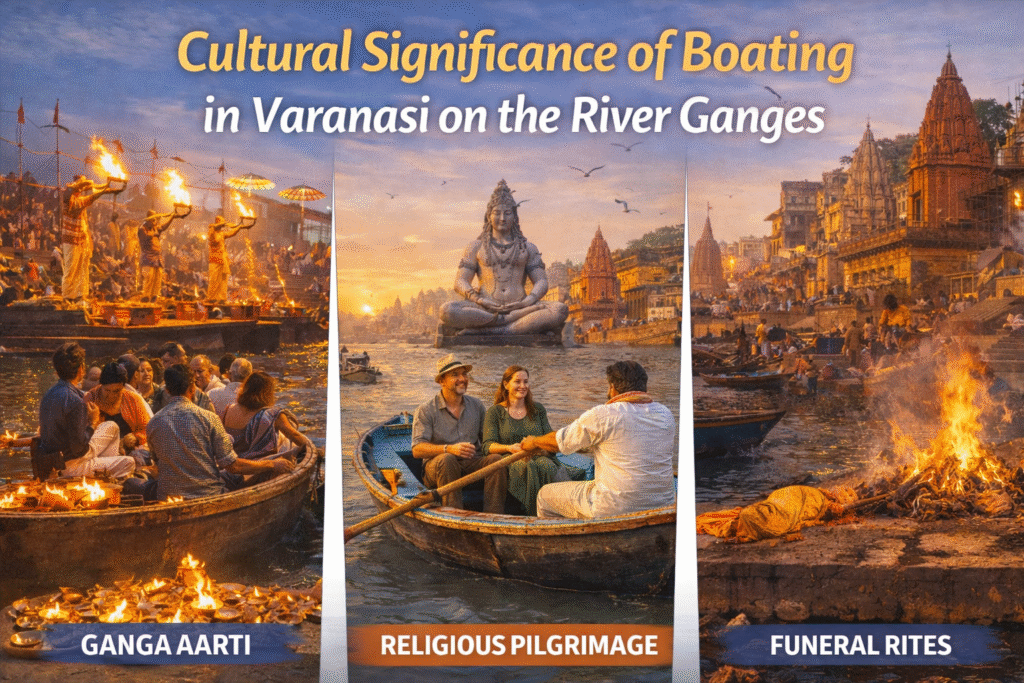
Varanasi, the oldest living city in the world, is a place where culture, spirituality, and tradition flow together like the sacred Ganga itself. Among the many experiences the city offers, boating in Varanasi stands out as one of the most culturally rich and spiritually meaningful activities.
A Varanasi boat ride is not just about sightseeing—it is a journey through centuries of tradition, rituals, and beliefs that define the essence of Kashi. As you glide along the River Ganges, you witness life, death, devotion, and celebration—all coexisting in harmony.
In this guide, we explore the cultural significance of boating in Varanasi on the River Ganges, helping you understand why this experience is so deeply rooted in Indian heritage.
The Spiritual Essence of Boating in Varanasi
The River Ganges, or Ganga, is considered a living goddess in Hindu culture. For centuries, people have come to Varanasi seeking purification, blessings, and liberation (moksha).
Boating in Varanasi allows you to witness this sacred connection up close. From early morning prayers to evening rituals, every moment on the river reflects deep-rooted faith and tradition.
During a boat ride in Varanasi, you experience:
- Devotees performing Ganga snan (holy bath)
- Priests chanting Vedic mantras
- Temples echoing with bells and prayers
- Rituals that have remained unchanged for generations
Boating as a Cultural Journey Through the Ghats
The ghats of Varanasi are the heart of its cultural identity. Each ghat has its own story, purpose, and spiritual importance.
From Assi Ghat to Dashashwamedh Ghat, a Varanasi boat ride takes you through a continuous flow of cultural experiences.
What You Witness During Boating:
- Religious ceremonies and daily rituals
- Traditional music and devotional songs
- Saints, sadhus, and pilgrims in meditation
- Historic architecture and ancient temples
👉 Boating connects you directly with the living culture of Varanasi.
Morning Rituals and Cultural Traditions
Morning time is the most peaceful and spiritually active period for boating in Varanasi.
Cultural Highlights of Morning Boating:
- Sunrise prayers offered to the Sun God
- Devotees taking holy dips in the Ganga
- Yoga and meditation along the ghats
- Chanting of mantras creating a divine atmosphere
This time reflects purity, discipline, and spiritual awakening—key elements of Indian culture.
👉 A sunrise boat ride in Varanasi is a true cultural immersion
Ganga Aarti – A Grand Cultural Expression
One of the most powerful cultural experiences during boating in Varanasi is witnessing the Ganga Aarti at Dashashwamedh Ghat.
What Makes It Special?
- Priests performing synchronized rituals with lamps
- Rhythmic chanting of Vedic hymns
- Devotional music and ringing bells
- Thousands of devotees gathered in prayer
Watching the aarti from a boat offers a unique perspective of this grand cultural event.
👉 It represents devotion, unity, and spiritual energy
Life, Death, and Moksha – A Unique Cultural Reality
Varanasi is one of the few places where life and death are openly visible and accepted as part of existence.
During boating in Varanasi, you may pass by sacred cremation ghats like Manikarnika Ghat and Harishchandra Ghat.
Cultural Meaning:
- Death is seen as a path to liberation (moksha)
- Continuous cremation rituals symbolize the cycle of life
- Strong belief in spiritual freedom in Kashi
👉 This experience offers deep philosophical insight into Hindu beliefs
Why Boating is the Best Way to Experience Varanasi’s Culture
Exploring the city through provides a complete cultural perspective:
- Covers multiple ghats in one journey
- Offers uninterrupted views of rituals and traditions
- Allows peaceful observation without crowd disturbance
- Connects you emotionally with the spiritual environment
👉 A Varanasi boat ride is like a moving cultural documentary
Best Time to Experience Cultural Boating
- Morning (Sunrise) → Spiritual rituals and peaceful culture
- Evening → Ganga Aarti and vibrant traditions
- October to March → Best season for comfortable experience
👉 Morning and evening are the most culturally rich times for boating
Tips to Understand Cultural Significance Better
- Choose a knowledgeable boatman or guide
- Opt for a private boat ride in Varanasi for better experience
- Respect religious practices and traditions
- Avoid loud behavior during rituals
- Observe silently and absorb the atmosphere
Why Choose Kashi Dham Tour and Travels
At Kashi Dham Tour and Travels, we offer curated experiences that highlight the true cultural significance of boating in Varanasi.
Our Services Include:
- Guided cultural boat tours
- Sunrise and Ganga Aarti boating packages
- Private and shared boat ride options
- Experienced local guides
- Comfortable and safe arrangements
We ensure your Varanasi boat ride becomes a meaningful cultural journey.
Final Thought
The cultural significance of boating in Varanasi on the River Ganges goes far beyond a simple ride. It is an experience that connects you with centuries of tradition, faith, and philosophy.
From sunrise rituals to evening aartis and the eternal cycle of life and death, every moment on the Ganga tells a story. Boating in Varanasi allows you to witness this living culture in its purest form.
If you truly want to understand the soul of India, step onto a boat in Varanasi—and let the river guide you through its timeless heritage.
Frequently Asked Questions (FAQs)
1. Why is boating in Varanasi culturally important?
It allows you to witness rituals, traditions, and spiritual life along the Ganga.
2. What can I see during a Varanasi boat ride?
You can see ghats, temples, Ganga Aarti, and daily rituals.
3. Is boating the best way to explore Varanasi’s culture?
Yes, it provides a complete and peaceful cultural experience.
4. Which ghat is best for cultural experience?
Dashashwamedh Ghat is the most vibrant.
5. Is it respectful to watch cremation ghats during boating?
Yes, but maintain silence and respect.
6. What is the best time for cultural boating?
Morning and evening are ideal.
7. Do I need a guide for better understanding?
Yes, a guide helps you understand the cultural significance deeply.